

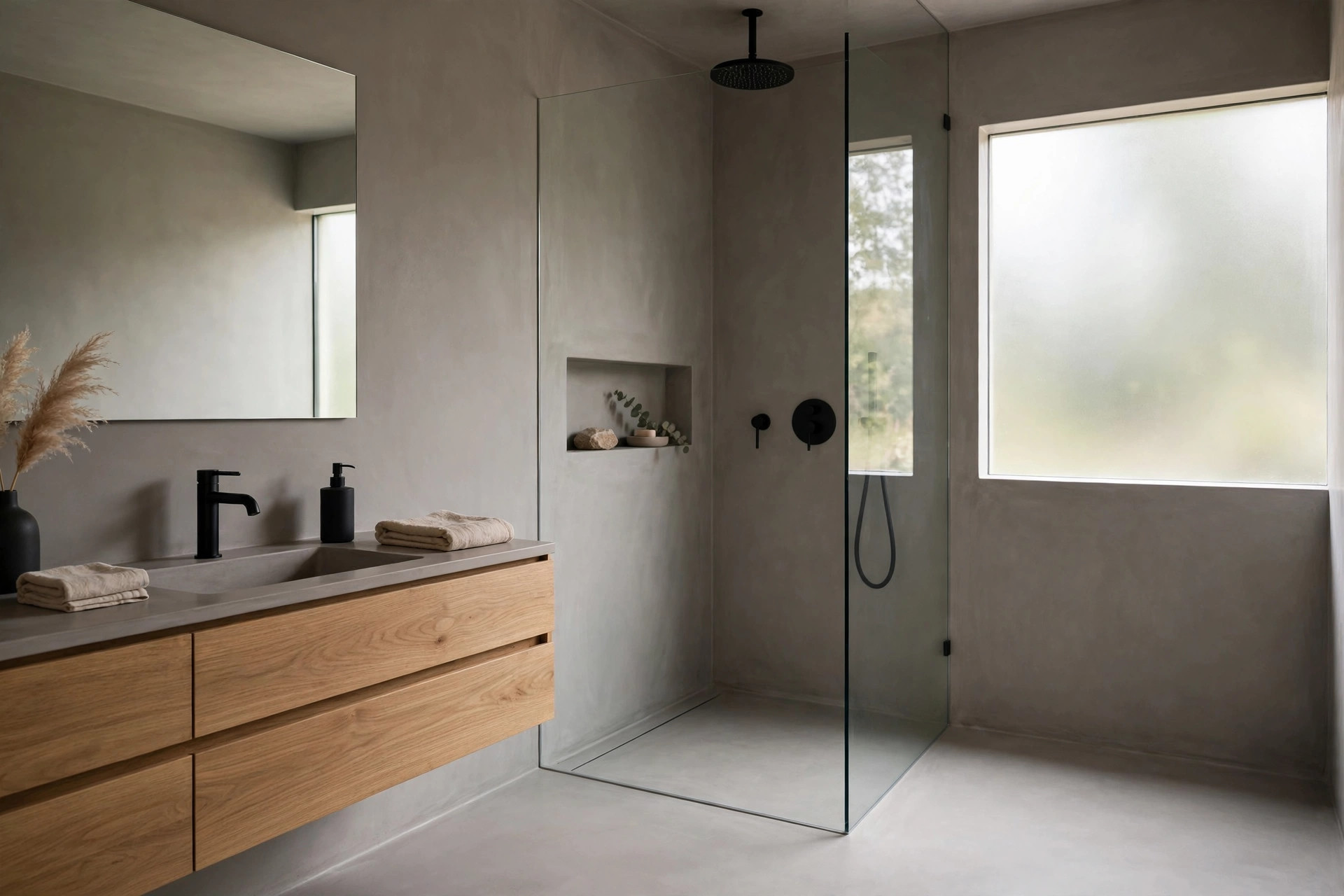
If you’re planning a bathroom, kitchen, or fireplace update in your Vancouver home, you’ve probably noticed a new name popping up in renovation conversations: microcement. For decades, tile was the default choice for hard-wearing surfaces. Now microcement is giving it real competition, and for some homes, it’s the better pick. Here’s an honest look at both, so you can decide with confidence.
What Microcement Actually Is
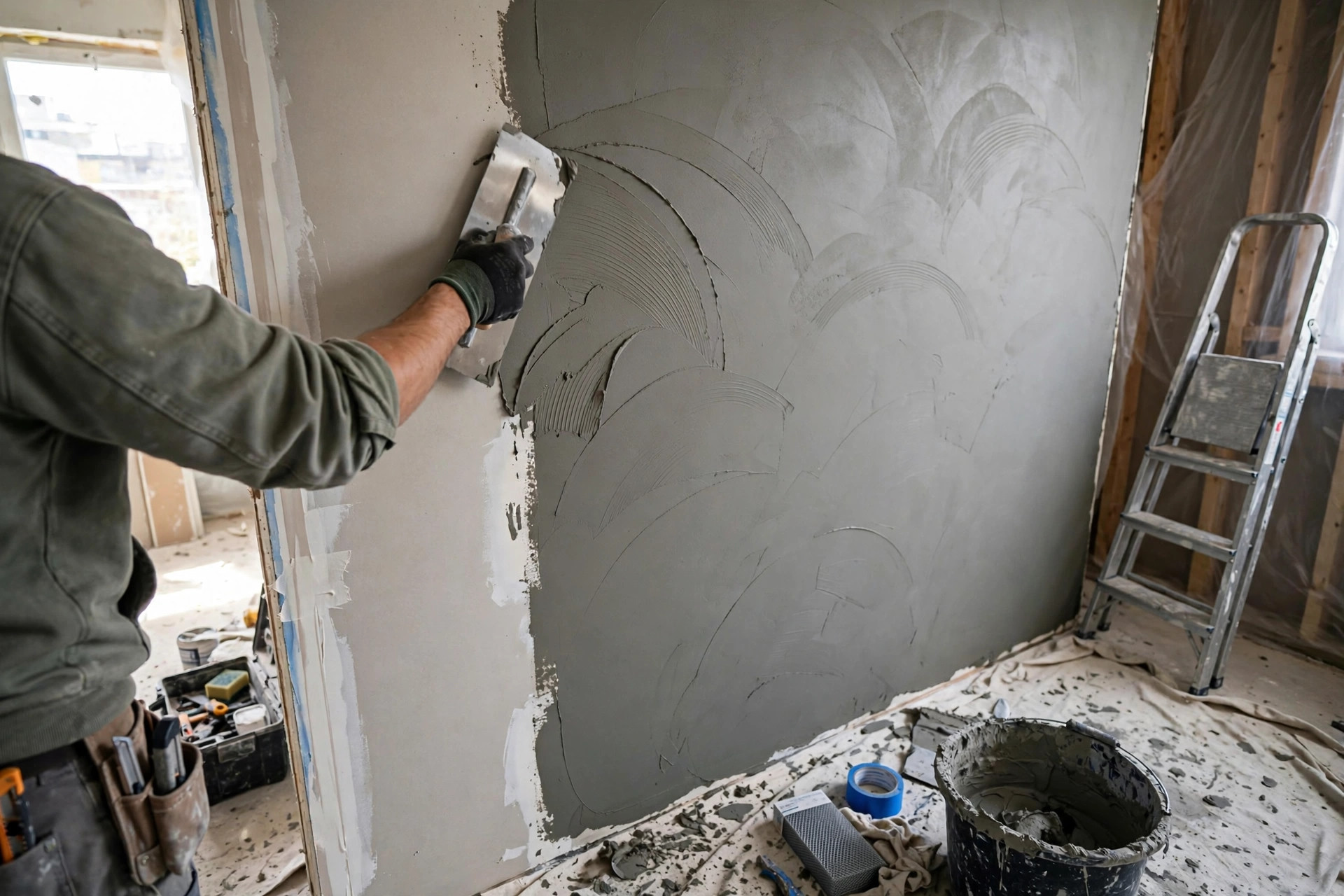
Microcement is a thin, polymer-based coating that’s trowelled on in layers, usually just 2 to 3 mm thick. It bonds to almost any stable surface, tile, concrete, drywall, even wood, and cures into a hard, seamless skin. Because it’s applied by hand, every surface has a subtle, natural texture. No two walls look exactly alike.
It’s been popular in Europe for years, and it’s taken off here in Metro Vancouver, especially in bathrooms, on fireplace surrounds, and on feature walls where people want a clean, modern finish without the fuss of a full gut renovation.
The Big Advantage: One Continuous Surface
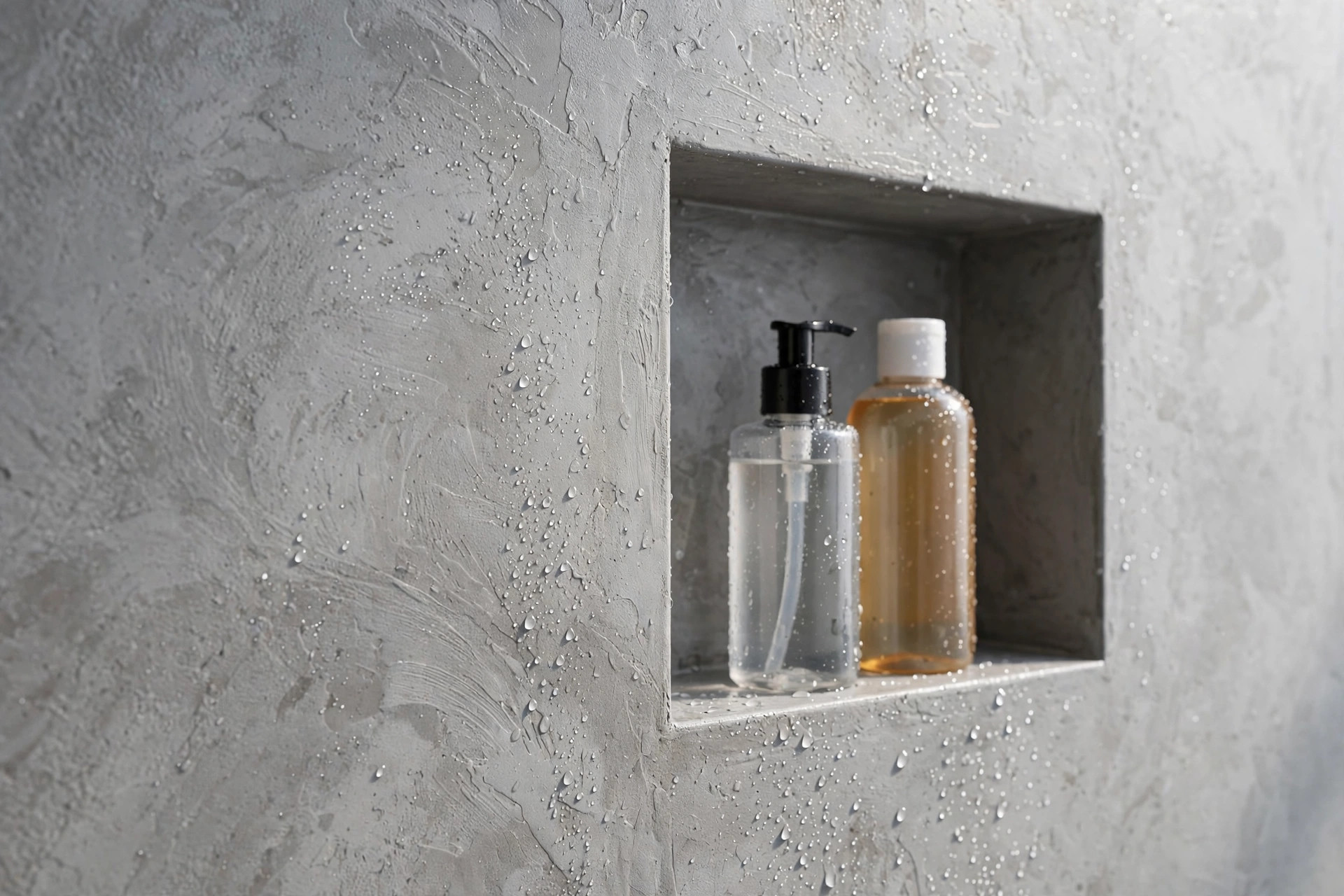
The first thing you notice about microcement is what isn’t there: grout lines. Instead of dozens of individual tiles and all the grout between them, you get a single smooth skin. Water can’t get in behind it the way it can with tile.
That matters more than you’d think. Grout is porous. In a damp Vancouver bathroom, it collects soap and moisture, turns yellow and grey, and it’s nearly impossible to clean properly. A microcement shower has nowhere for that grime to hide. You wipe the whole surface down in one go.
No Demolition: It Goes Right Over Your Existing Tile
Here’s the part that surprises most homeowners: microcement can be applied directly over your existing tile. You don’t need to rip anything out. No demolition, no dust sheets all over the house, and no days with builders in your home.
If your tile is solid and well bonded, the old surface simply becomes the base. The microcement layer goes over it and covers it completely, grout lines, dated colours, and all. And it does it without ripping a single tile out.
The Honest Case for Tile
None of this means tile is obsolete. Tile has earned its place, and it isn’t going anywhere.
It’s a classic look that suits heritage homes and traditional kitchens beautifully. Individual tiles let you play with shape and pattern, if you want a bold patterned floor or a handmade-look backsplash, tile is still the way to get it.
The trade-offs are real, though. Tile floors feel cold underfoot, which is no small thing on a January morning in Vancouver. Grout needs regular attention to stay looking clean. And if you ever decide to replace tile down the road, you’re back to demolition, dust sheets, debris, and days of mess.
Where Microcement Really Shines
Bathrooms are the obvious win: floors, walls, and shower enclosures in one waterproof, grout-free surface. But we’ve also seen it completely transform fireplace surrounds, giving dated brick or tired tile fireplaces a smooth, contemporary face without tearing anything out. Feature walls, entryways, and kitchen floors are all fair game too.
The seamless, modern aesthetic suits the clean lines of so many Vancouver condos and new builds, and it can make a small bathroom feel noticeably larger, since there are no grid lines chopping up the space visually.

Day-to-Day Cleaning and Upkeep
With tile, maintenance means keeping an eye on the grout: resealing it periodically and scrubbing it when it starts to look tired. With microcement, upkeep is closer to wiping down a countertop. A pH-neutral cleaner and a cloth are all you need.
Both surfaces last when they’re installed properly, the difference is mostly in how much effort they ask of you week to week.
So Which Should You Choose?
Both are valid choices. It comes down to your home, your taste, and how you live.
Choose tile if you love a classic look, want patterned or handmade-look surfaces, or like the idea of replacing a single tile rather than resurfacing a whole wall. Choose microcement if you want a seamless, modern finish with no grout to scrub, no cold grid underfoot, and, in many cases, no demolition at all.
There’s no wrong answer here. The best surface is the one you’ll be happy looking at and living with for the next fifteen years.
Microcement in Metro Vancouver
At Exceptional Painting, we apply microcement on fireplaces, walls, floors, and bathrooms across Metro Vancouver, from North Vancouver condos to Burnaby family homes. If you’re weighing microcement against tile for your project, we’re happy to talk it through and show you what the finish looks like up close.
Thinking about microcement for your home? Call Exceptional Painting at (236) 995-6777 to book a consultation and see if it’s the right fit for your space.