

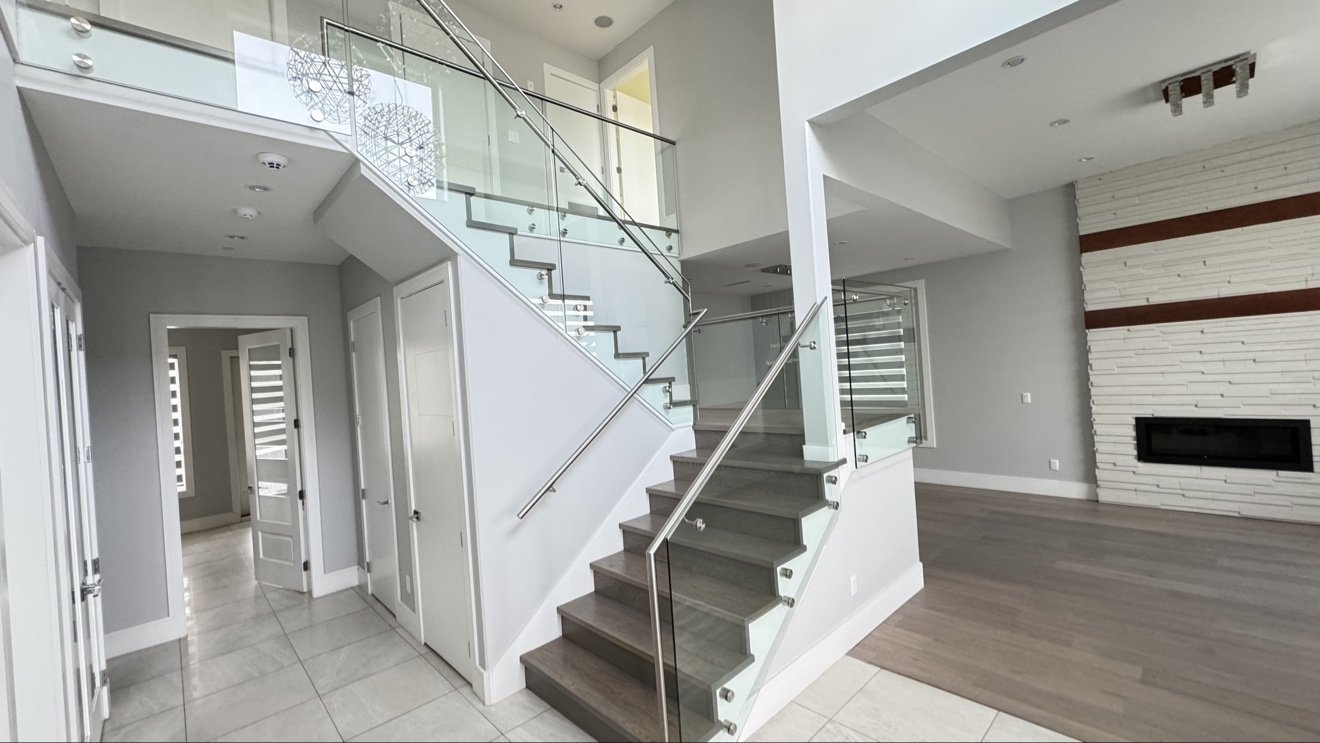
Walk into any house and the staircase is the first thing your eye finds. It is also the most touched surface in the whole home. Hands grip the rail every day. Shoes scuff the treads. Bags bump the spindles. A staircase shows wear faster than any wall, and it shows a bad paint job faster than anything else in the house.
That is why stairs and railings need a different approach from a normal room. The prep is heavier, the finish has to be tougher, and the order of work matters. Here is how we do it in Vancouver homes.
Why stairs and railings wear out first
A handrail is touched hundreds of times a week. Skin oil, hand cream and dirt build up on the surface, and paint will not stick to that film. If a painter skips the cleaning step, the new coat peels off in sheets within months. We have been called in to fix exactly that, and the fix is always a full strip and redo, which costs more than doing it right the first time.
Spindles have their own problem. There are dozens of them, each with curves and joints where dust and old paint collect. A brush alone leaves drips in those joints. Treads take shoe traffic, so a wall paint finish will scuff and wear through in the middle of each step.
Paint or stain: how to choose
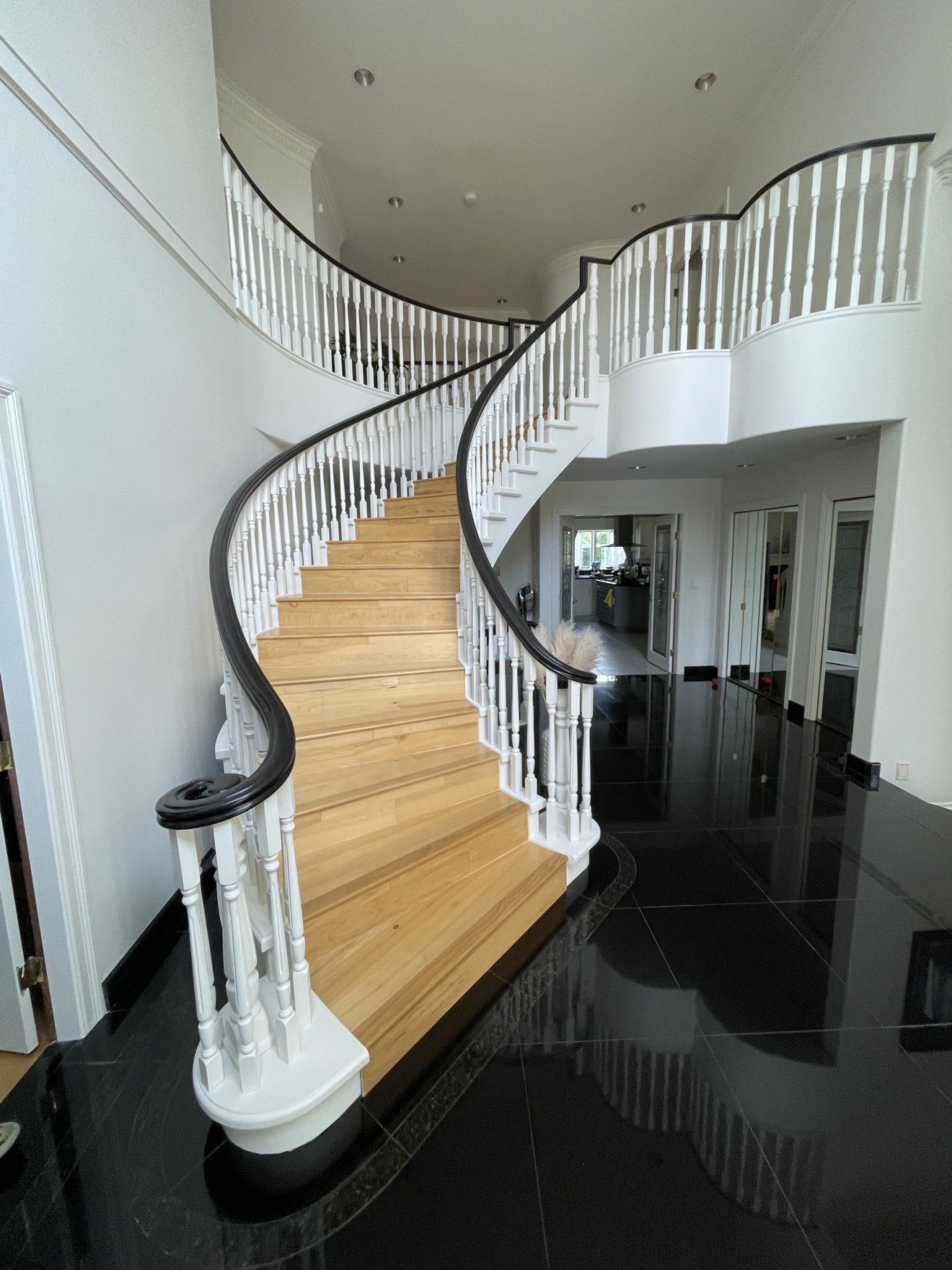
Most Vancouver homes we work in go one of two ways. Painted railings with a black or deep coloured handrail and white spindles is the classic look, and it suits both older homes and new builds. It is also the easiest to keep looking fresh, because touch ups blend in well.
Stained treads with painted risers is the other common choice. The wood grain shows on the tread where you see it most, and the white riser keeps the staircase feeling light. If the treads are in good shape, staining them and painting the rest gives a high end look for less work than a full refinish.
Either way, the decision should come before the work starts. Stripping a painted railing back to stain later is a big job, so it is worth taking a day to look at samples in your own light.
The prep that makes the finish last
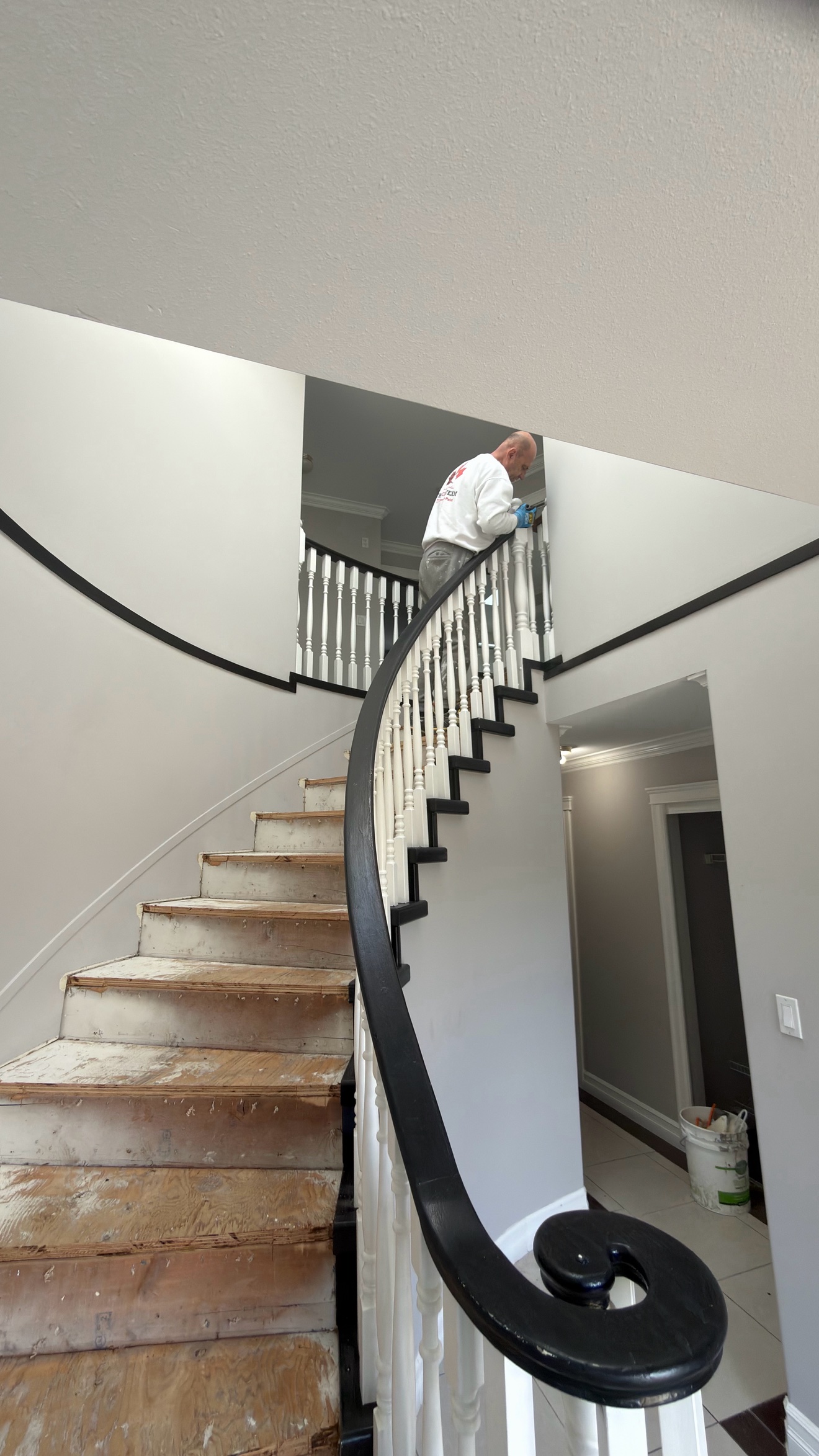
Prep is most of the job on a staircase. We start by cleaning the handrail with a degreaser to remove the years of hand oil. Then we sand every surface we are painting, including the spindles, and fill any dents and nail holes. Loose caulking along the stringer and where the spindles meet the rail gets cut out and redone.
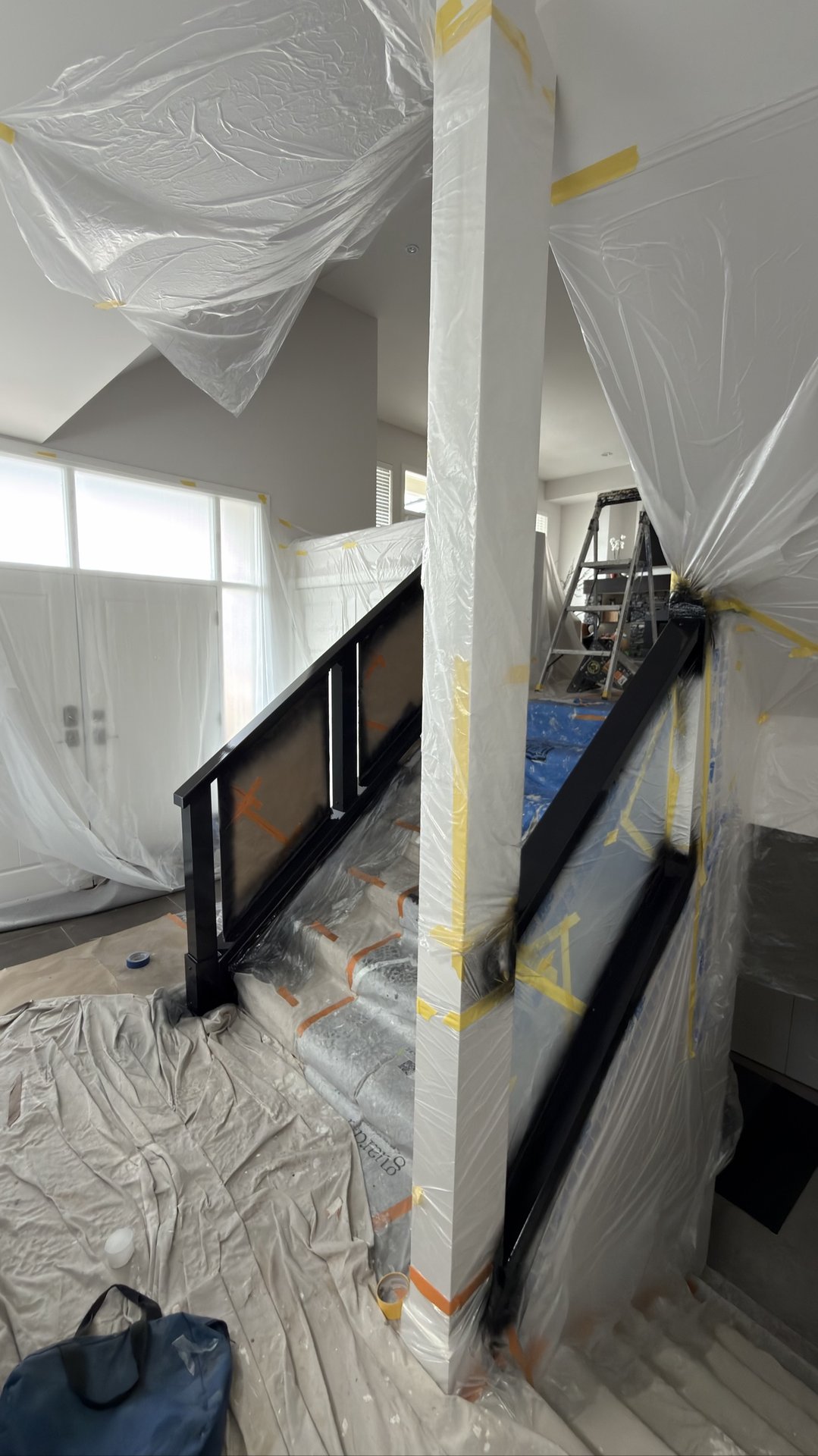
Then comes the masking. A staircase sits in the middle of the house, open to the rooms around it. Everything nearby gets covered: floors, walls, light fixtures, furniture. Spraying gives the smoothest finish on spindles, but spray goes everywhere if it is not contained, so the masking has to be thorough. This is the slow part of the job, and it is the part that separates a clean result from a dusty mess.
Spray or brush
Spindles are best sprayed. A sprayer lays an even coat over all those curves without brush marks or drips, and it gets into the joints a brush cannot reach. The handrail itself can go either way. We often spray the spindles and the underside of the rail, then brush the top of the rail where the hand sits, because a brushed top coat can be built up a little thicker.
Treads are almost always brushed or rolled. They need a hard wearing coat, and it is applied in thin layers with full drying time between them. Rushing the coats on treads is how you get a finish that sticks to socks.
What finish to use
Never put flat paint on a handrail. It marks the first week and cannot be wiped clean. For railings we use a satin or semi gloss finish. It wipes clean, it resists hand marks, and it has enough sheen to look crisp without looking plasticky. See our paint finish guide for how each finish behaves around the house.
Treads need something tougher again. A floor grade enamel or a clear coat over stain holds up to shoes. We use premium paint, Sherwin Williams SuperPaint, on the painted parts, and we back the work with our 3 year workmanship warranty.
How long it takes and what to expect
A typical staircase takes two to four days. Day one is prep and masking. Then the coats go on, with drying time between them. The stairs cannot be used while the coats are wet, so we plan the sequence with you. In most homes we finish one side or one flight so the family can still move around, or we schedule the work while you are away.
The cost depends on the staircase itself: how many spindles, how long the rail runs, whether the treads need sanding or just a recoat, and how much old paint has to come off. There is no single price for stairs, which is why we always look at the staircase in person before quoting.
A painted staircase changes the whole feel of a home. It is the centrepiece of the entry, and when the rail is smooth and the spindles are clean white, the whole main floor looks newer. If your stairs are scuffed, sticky or just tired, call Exceptional Painting at (236) 995-6777. We paint homes across Metro Vancouver, we are fully insured with $5M liability and WCB coverage, and we will come and look at your staircase and give you a straight answer on what it needs. See also our interior painting services and painting costs in Vancouver.