

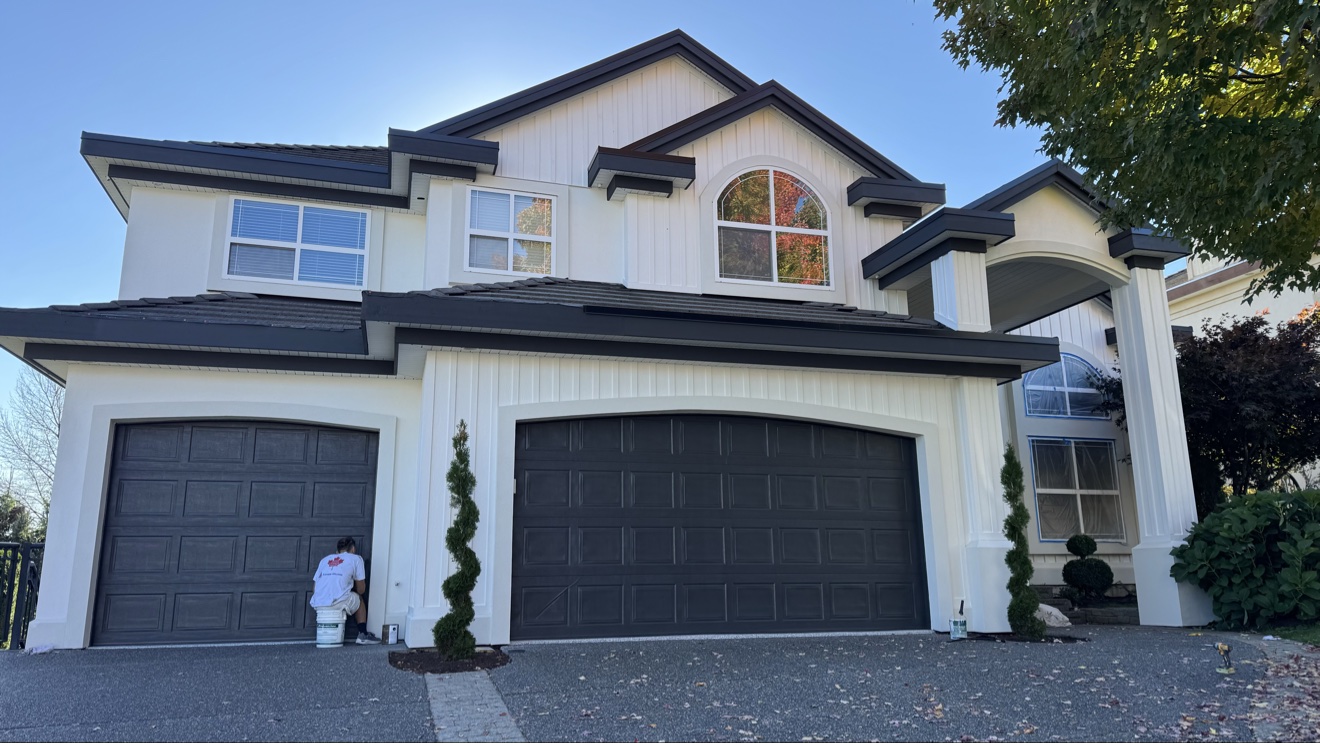
Every October, our phone starts ringing with the same question: “Can you still paint the outside of my house before winter?”
And every October, I give the same honest answer: you really shouldn’t. Not here. Not in Metro Vancouver.
I know that’s not what you want to hear when your siding is looking tired and you’d love to get it done before the holidays. But painting your house exterior in wet fall weather is one of the fastest ways to throw money away, and I’d rather tell you that now than repaint your house twice.
What exterior paint actually needs to cure
Paint doesn’t just “dry.” It cures, a chemical process where the film hardens and bonds to the surface. For that to happen properly, it needs three things:
- A dry surface to grip onto
- Air temperature consistently above 10°C (50°F), day and night
- Low humidity, so moisture can escape the film as it cures
A Vancouver fall gives you none of the three. It rains for days at a time. Morning temperatures drop below 10 degrees. And even on a “dry” October day, there’s dew on the siding until late morning, and the sun is gone by five.
Most paint cans say you can apply down to 10°C. What they don’t say on the can is that the surface needs to stay above that while the paint cures, which takes days, not hours. A 12-degree afternoon followed by a 6-degree night is enough to ruin the cure.
What goes wrong when you paint over damp wood
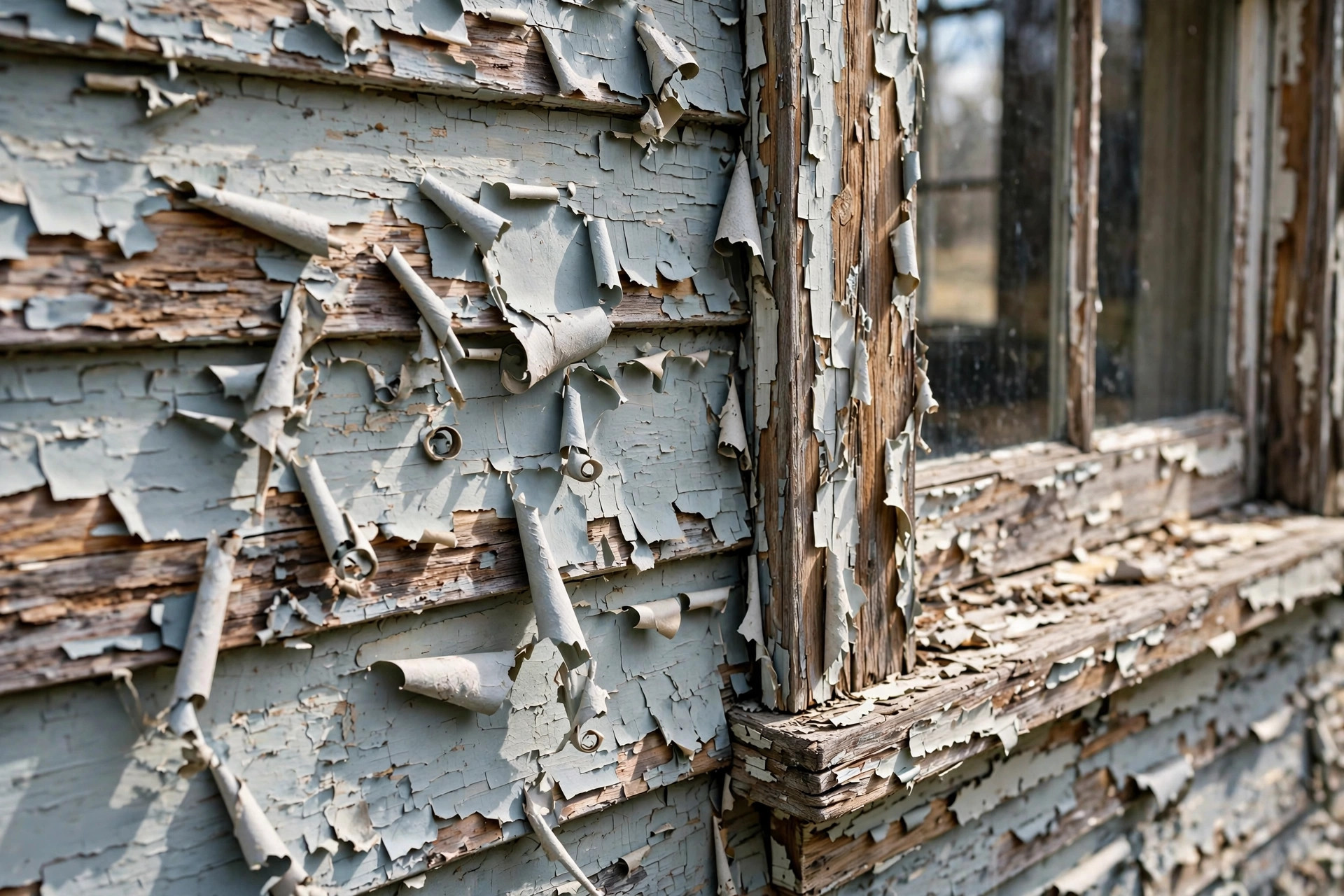
Here’s what we see when we get called to fix a fall paint job a year later:
Moisture gets trapped under the paint film. The paint looks fine for a few months, then the trapped moisture starts pushing. You get blistering, bubbling, and peeling. Whole sheets of paint come off, revealing damp wood underneath. On shaded, north-facing walls, you can also get mildew growing under and through the film.
The frustrating part? It doesn’t look like a bad paint job at first. It looks perfect, until it doesn’t.
We’ve stripped and repainted enough of these to know the pattern by heart. It almost always traces back to one thing: the wood was wet when the paint went on.
“But what about those paints made for cold, damp weather?”
Fair question, and I’ll be straight with you.
Yes, there are premium exterior paints formulated to cure in cooler, damper conditions. That category exists, and the paints are good. Some of them are very good. But they’re not magic.
But here’s the part the paint store won’t tell you: the paint is only half the equation. The other half is the wood underneath it, and no painter on earth can moisture-check every single board on your house.
Siding doesn’t hold moisture evenly. One board is dry. The next one, shaded by the eave, is still damp. And no paint can cure on damp wood. A moisture meter spot-check tells you about the three boards you tested, not the three hundred you didn’t.
So even with the best damp-weather paint money can buy, the risk of failure stays high. Peeling a year later. Blistering on the shaded side. Same story.
If you still want to go ahead in the fall after hearing all this, that’s your call, and I’ll respect it. But you should know upfront that a failure is a real possibility, not a freak accident. I’d rather you hear it from me now than discover it next September.
Rushing it costs you twice
This is the math nobody does before a fall paint job:
You pay full price for the exterior job in October. A year later, it’s peeling. Now you pay again, and the second time costs more, because now there’s scraping, sanding, and priming failed paint before you can even start. All the prep work from the first job is wasted.
Waiting six months for dry weather costs you nothing. Rushing costs you the whole job, twice.
Our guide on how long exterior paint lasts in Vancouver breaks down what a proper job should give you, a decade or more, when it’s done in the right conditions.
What to do instead
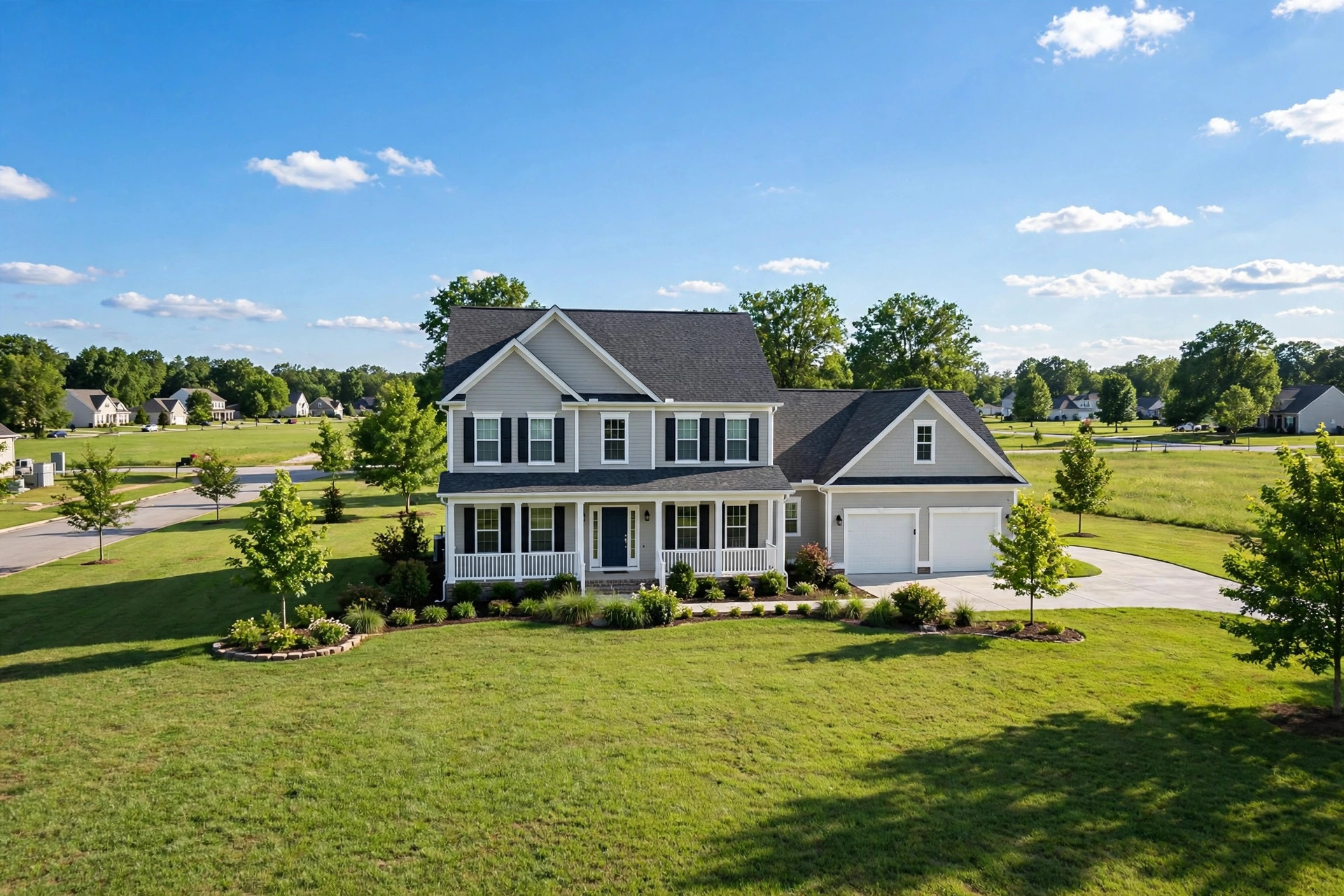
Wait for late spring. In Metro Vancouver, the reliable exterior painting window runs roughly from May through September, a stretch of dry days where the siding is truly dry and temperatures stay up overnight.
And here’s the smart move most people miss: book your slot during the winter. Good painters’ summer schedules fill up fast. If you call us in January or February, you get first pick of summer dates, and our exterior painting timing guide walks through exactly when to book.
If your siding is in rough shape right now, read our signs your house needs repainting, it’ll tell you whether you can safely wait, or whether something needs attention sooner (like exposed wood or failing trim, where water is getting in).
Meanwhile, your interior is fair game
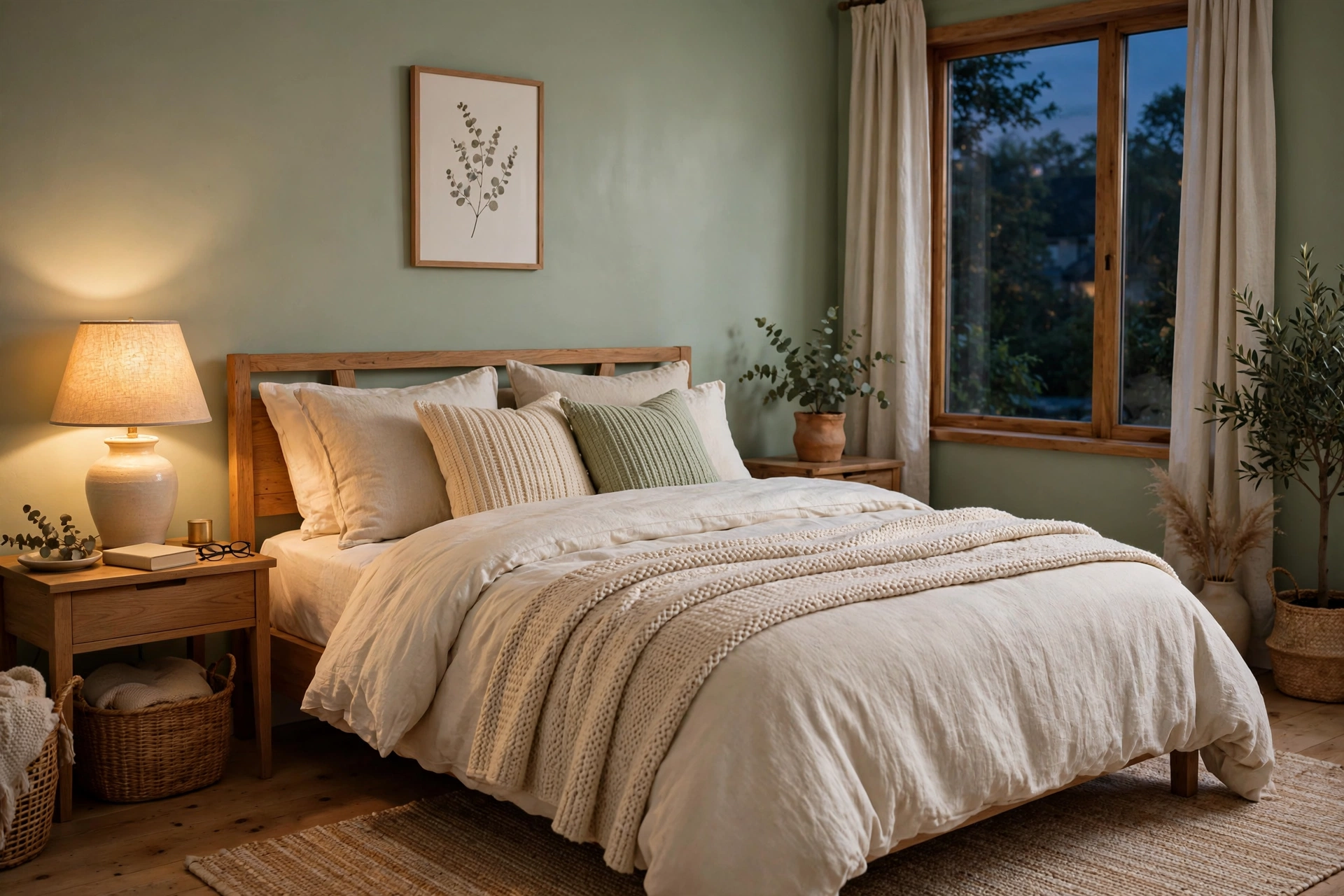
Here’s the good news: everything I just said applies to the outside of your house. Inside, it’s a different story.
Interior painting doesn’t care about rain, dew, or short days. Your furnace keeps the house at a steady temperature while we work, and the paint cures just like it would in July. If you want the details, our guide to interior painting in winter walks through it in detail.
We paint interiors all year round across Metro Vancouver. If the outside has to wait until spring, the inside doesn’t. Call (236) 995-6777 for a free estimate, inside now, outside in the spring, or both booked together so you’re first in line when the dry weather comes.
The bottom line
I’m a painter. Telling you not to hire me for an exterior job in October costs me money this month. I’m telling you anyway, because a paint job that fails in a year helps nobody, not you, and not my reputation.
Wait for the dry stretch. Your siding, your wallet, and your painter will all thank you.
We’re Exceptional Painting, we do exterior painting across Metro Vancouver, and every job comes with our lifetime warranty on paint and 3-year workmanship warranty. Call (236) 995-6777 and we’ll get you booked for the right season.