

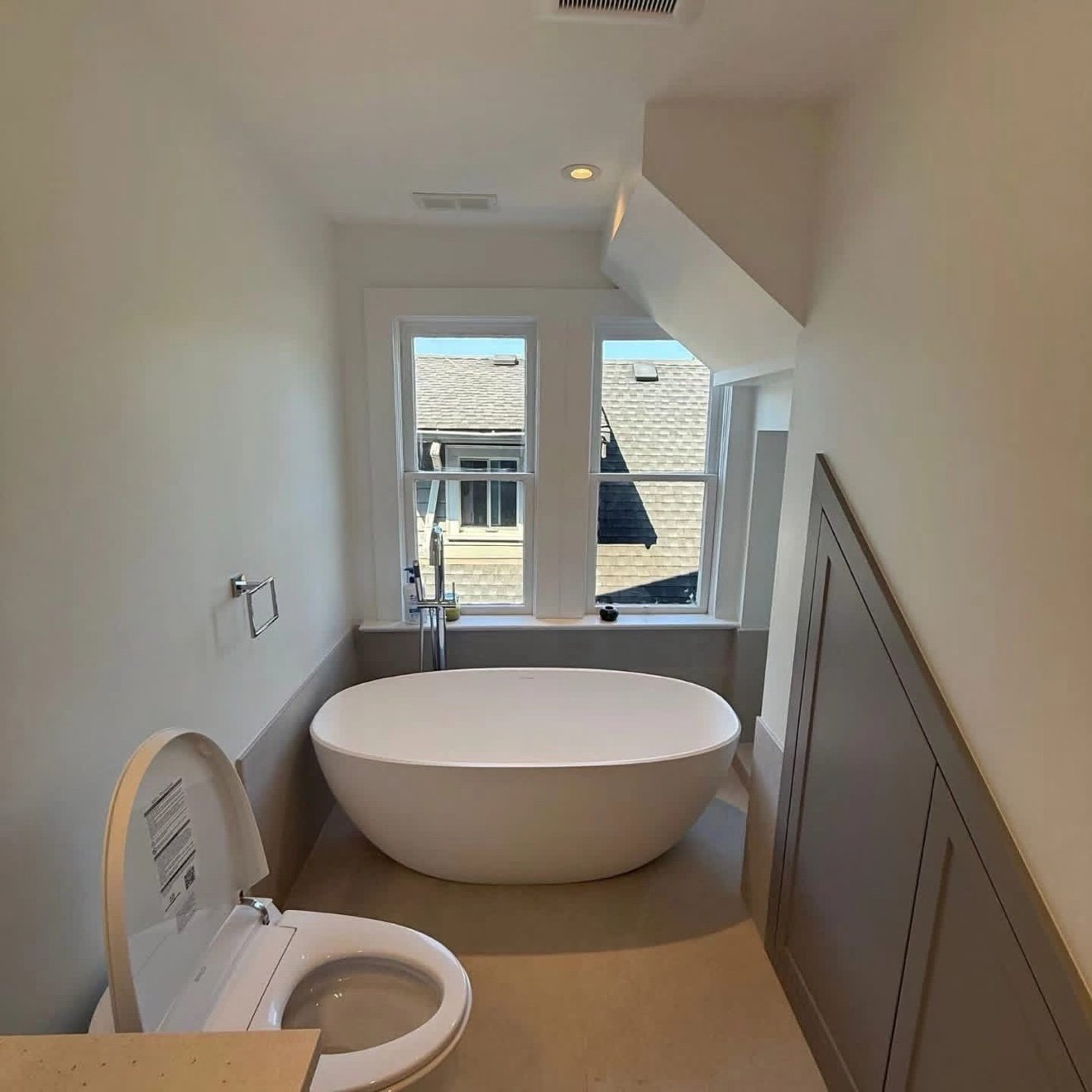
A bathroom is the hardest room in the house for paint. Every shower fills it with steam. Water sits on the walls and the ceiling. In Vancouver, where damp air is a fact of life for much of the year, a bathroom that is painted like a bedroom will not stay nice for long. The paint bubbles near the shower. It peels over the tub. Dark spots show up in the corners.
None of that means bathrooms cannot be painted well. It means they need to be painted for moisture, not just for colour. This is a plain look at what goes wrong in Vancouver bathrooms, and what a proper paint job there actually involves.
Why Bathroom Paint Fails
Paint fails in bathrooms for a few clear reasons, and age is rarely the first one. The most common cause is steam with nowhere to go. Hot showers push moisture into the air, and if the fan is weak or never runs, that moisture settles on the walls and the ceiling and works its way under the paint film. Over time the bond lets go, and you get bubbling and peeling, usually starting above the shower or around the tub.
The second cause is the wrong paint. Flat paint made for living rooms soaks up moisture and holds it. It softens, stains, and gives mildew a place to grow.
The third cause is rushed prep. Bathrooms collect soap film and residue on the walls. Paint over that film does not bond, no matter how good the paint is. It can look fine for months, then let go in sheets.
Ventilation Does Most of the Work
Here is the honest truth about bathroom paint: the fan matters more than the paint can. No paint survives a bathroom where steam sits on the walls every day. Before thinking about colour, make sure the exhaust fan works and actually gets used. It should run during every shower and keep running after, until the mirror clears and the air feels dry again.
If the fan is loud, weak, or clogged with dust, people stop using it, and the paint pays for it. A bathroom with dry air between showers is one where paint holds up. A bathroom that stays damp is a losing fight for any coating.
Moisture decides how long a finish lasts, inside and outside. We wrote about that for exteriors in our guide to exterior painting in fall weather.
Choosing Paint for a Bathroom
Once ventilation is handled, paint choice is next. Bathrooms want paint made to handle moisture, with a sheen that sheds water instead of soaking it in. Satin and eggshell suit bathroom walls, and a semi gloss works well on trim and doors in damp rooms.
Primer matters too, on bare drywall, patched spots, and areas where old paint was scraped off. It seals the surface so the topcoat bonds evenly. Skipping primer on patches is a classic reason bathroom paint fails in exactly those spots a year later.
One thing worth knowing: we work with Sherwin-Williams SuperPaint in a velvet finish on many interior jobs, and it carries a manufacturer lifetime warranty. The right product in the right room is half the job.
Mold and Mildew: Paint Is Not the Fix
Dark spots in bathroom corners are usually mildew feeding on moisture and residue on the walls. Paint covers the spots for a while but does not fix them. If the moisture source stays, the spots come back through the new paint.
The fix comes before the paint. Clean the affected areas. Fix the ventilation so the room dries between showers. Check for leaks around the tub, the toilet base, and the plumbing behind the walls. Paint over an active leak is wasted work.
If staining keeps returning in the same place, that is the room telling you something. Find the moisture first. Paint second.
Prep That Actually Matters
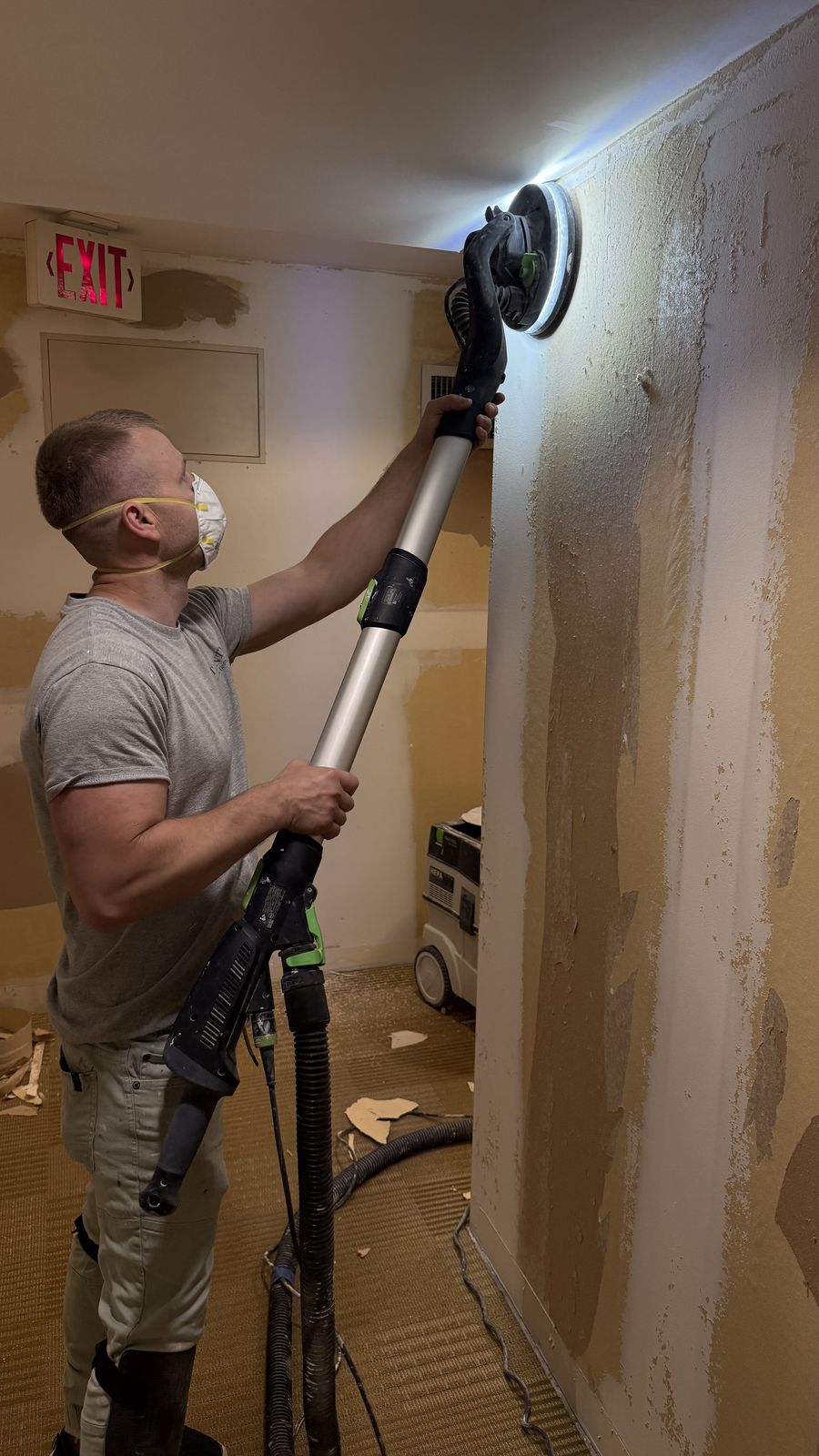
Bathroom prep is mostly cleaning and patience. Walls need washing so soap film and residue are gone. Glossy old paint needs a light sanding so the new coat can grip. Caulk around the tub, the sink, and the trim should be sound, because cracked caulk lets water behind the paint.
Drywall damage is common in bathrooms: soft spots near the tub, dings, old patches. Those need proper repair before paint. We covered the approach in our article on drywall repair before painting, and bathrooms are where that prep pays off most.
Take the time here and the paint job lasts. Rush it and the bathroom will tell on you within a year.
Signs It Is Time to Repaint
Bathrooms show their age clearly. Peeling above the shower or around the tub is the classic sign. Bubbling paint, stains that bleed through, caulk pulling away, and dullness that cleaning does not fix all point the same way.
How long bathroom paint lasts depends on ventilation, the paint used, and the prep underneath. For the bigger picture, see our guide to how long interior paint lasts. In a well ventilated bathroom with the right paint and solid prep, the finish holds up well for years. In a steamy one, no paint gets a fair chance.
What a Proper Bathroom Paint Job Looks Like
A proper bathroom job follows an order that does not change. Check the ventilation and fix what is weak. Repair the drywall and make the caulk sound. Wash the walls, sand the glossy spots, prime the bare areas and patches. Then paint with a moisture friendly product in the right sheen, applied evenly.
That is the work we do at Exceptional Painting, a Metro Vancouver painting company handling interior, exterior, residential, commercial, and strata work. Our crews are covered by WCB, we carry $5M in liability insurance, and our work comes with a three year workmanship warranty.
For a sense of project costs in this area, see our guide to painting costs in Vancouver.
Get a Free Quote
If your bathroom paint is peeling, bubbling, or growing spots that keep coming back, send us a photo or book a walkthrough. We will look at the ventilation, the walls, and the moisture, and tell you honestly what the room needs.
Call or text (236) 995-6777 for a free quote on bathroom painting in Metro Vancouver.